
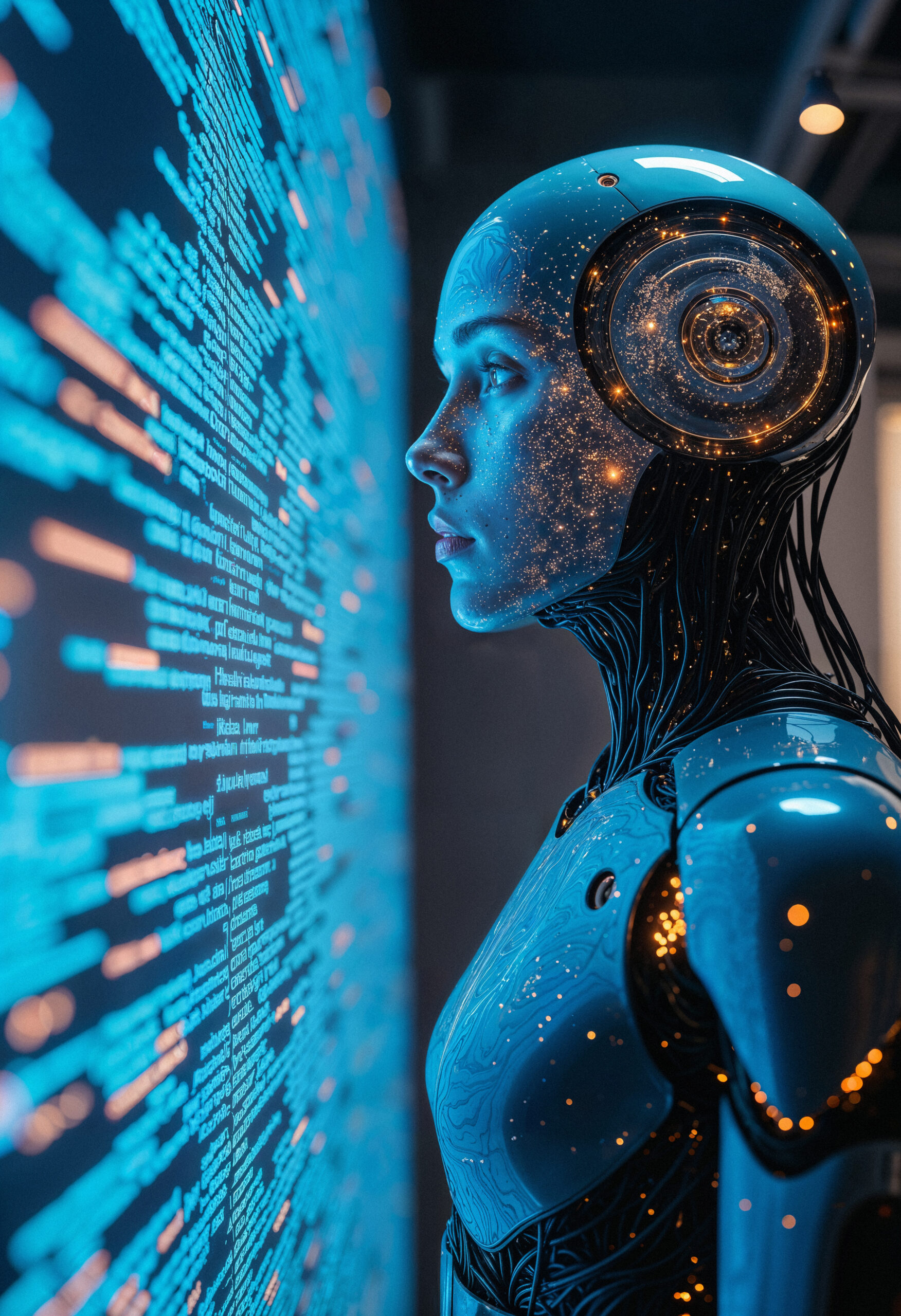
The Moment Machines Began to Think With Us: Learn AI at Delight Technical College
The Moment Machines Began to Think With Us
One day, you ask your phone for directions.
Another day, a system recommends what you should watch, wear, or read.
Then suddenly, a machine writes, designs, analyzes, and even speaks.
It feels almost magical.
But it isn’t magic.
It is Artificial Intelligence—quietly woven into everyday life, reshaping how we work, learn, create, and communicate.
The question is no longer whether AI will affect us.
The real question is:
Do we understand what AI actually is—and how to use it responsibly?
This is the story of Artificial Intelligence: what it is, where it came from, how it works, and why learning it matters today.
- What Exactly Is Artificial Intelligence?
Artificial Intelligence, commonly known as AI, refers to machines or software systems designed to perform tasks that normally require human intelligence.
These tasks include:
- Learning from experience
- Recognizing patterns
- Understanding language
- Making decisions
- Solving problems
In simple terms:
AI is when machines are taught to think, learn, and adapt—within limits set by humans.
AI does not replace human intelligence. It extends it.
- AI Is Not a Robot: Clearing Common Myths
When people hear “AI,” they often imagine humanoid robots or science-fiction villains.
In reality, most AI has no physical form.
AI lives inside:
- Smartphones
- Computers
- Cameras
- Software applications
- Online platforms
It works behind the scenes—analyzing data, making predictions, and assisting decisions.
Understanding AI begins by separating reality from fiction.
- A Brief History of Artificial Intelligence
AI did not appear overnight.
Its roots go back decades.
The Early Ideas
In the 1950s, scientists began asking:
Can machines think?
Alan Turing, a pioneer of computing, proposed what became known as the Turing Test, a way to evaluate machine intelligence.
The term “Artificial Intelligence” was officially coined in 1956.
Early Challenges
Early AI systems were limited.
They could follow rules—but not learn.
Progress was slow due to limited computing power and data.
- The Turning Point: Data and Computing Power
AI truly advanced when two things became widely available:
- Large amounts of data
- Faster computers
With these, machines could be trained to learn from examples rather than just follow instructions.
This shift gave rise to machine learning.
- How AI Works: A Simple Explanation
At its core, AI relies on:
- Data
- Algorithms
- Learning processes
Machine Learning
Machine learning allows systems to improve through experience.
For example:
- Recognizing faces in photos
- Detecting spam emails
- Predicting trends
The more data the system sees, the better it becomes.
Deep Learning
Deep learning uses layered networks inspired by the human brain.
This is what powers:
- Voice assistants
- Image recognition
- Language translation
AI does not understand like humans—but it identifies patterns extremely well.
- AI in Everyday Life
AI is already part of daily routines.
You encounter it when:
- Using navigation apps
- Watching recommended videos
- Unlocking your phone with your face
- Interacting with customer support chatbots
Most people use AI without realizing it.
- AI Across Industries
AI is transforming almost every sector.
Creative Industries
AI supports:
- Video editing
- Design assistance
- Content creation
- Animation and media production
Education
AI enables:
- Personalized learning
- Digital tutoring
- Skill assessment
Fashion and Design
AI helps with:
- Trend analysis
- Pattern creation
- Virtual fitting
- Supply optimization
AI is a tool—not a replacement—for creativity.
- AI and Africa: Opportunity and Growth
Africa stands at a unique moment.
AI offers opportunities to:
- Bridge skill gaps
- Improve access to education
- Support creative entrepreneurship
- Build local solutions
Young people equipped with AI knowledge can shape technology that reflects African realities—not imported assumptions.
- Ethics and Responsibility in AI
With great power comes responsibility.
AI raises important questions:
- Who controls the data?
- How are decisions made?
- Can bias be reduced?
Ethical AI requires:
- Human oversight
- Transparency
- Accountability
Learning AI must include understanding its limits and responsibilities.
- AI Is a Skill, Not a Mystery
Many fear AI because they do not understand it.
But AI is not reserved for geniuses.
It is a learnable skill.
With the right training, students can:
- Understand how AI works
- Use AI tools responsibly
- Integrate AI into creative and technical fields
Education transforms fear into confidence.
- Preparing for an AI-Driven Future
The future of work will not be human versus AI.
It will be human with AI.
Those who know how to:
- Use technology
- Think critically
- Adapt creatively
will thrive.
- Learning AI in a Practical Way
AI education should not be abstract.
It should be:
- Practical
- Contextual
- Industry-relevant
This is where technical institutions play a critical role.
- Delight Technical College: Building Skills for the Future
At Delight Technical College, technology is approached as a tool for empowerment.
Students are trained to:
- Understand modern digital tools
- Apply technology in creative and practical fields
- Think critically about innovation
Whether in design, fashion, media, or communication, AI is integrated as part of a broader skill set.
Delight prepares students not just for today’s jobs—but for tomorrow’s industries.
- The Future of AI Belongs to the Informed
AI will continue to evolve.
But its impact depends on who understands it.
Those who learn early will lead.
Those who ignore it will follow.
Knowledge is the difference.
Learn the Technology Shaping Tomorrow
Artificial Intelligence is no longer optional knowledge.
It is part of the modern world.
At Delight Technical College, students are equipped with practical skills that align with emerging technologies and creative industries.
If you want to understand AI—not fear it—and learn how to apply it responsibly, Delight offers the foundation you need.
Take the step. Enroll at Delight Technical College and prepare for the future today.

You may also like
African Typography and the Design of Kenyan-Language Content

