
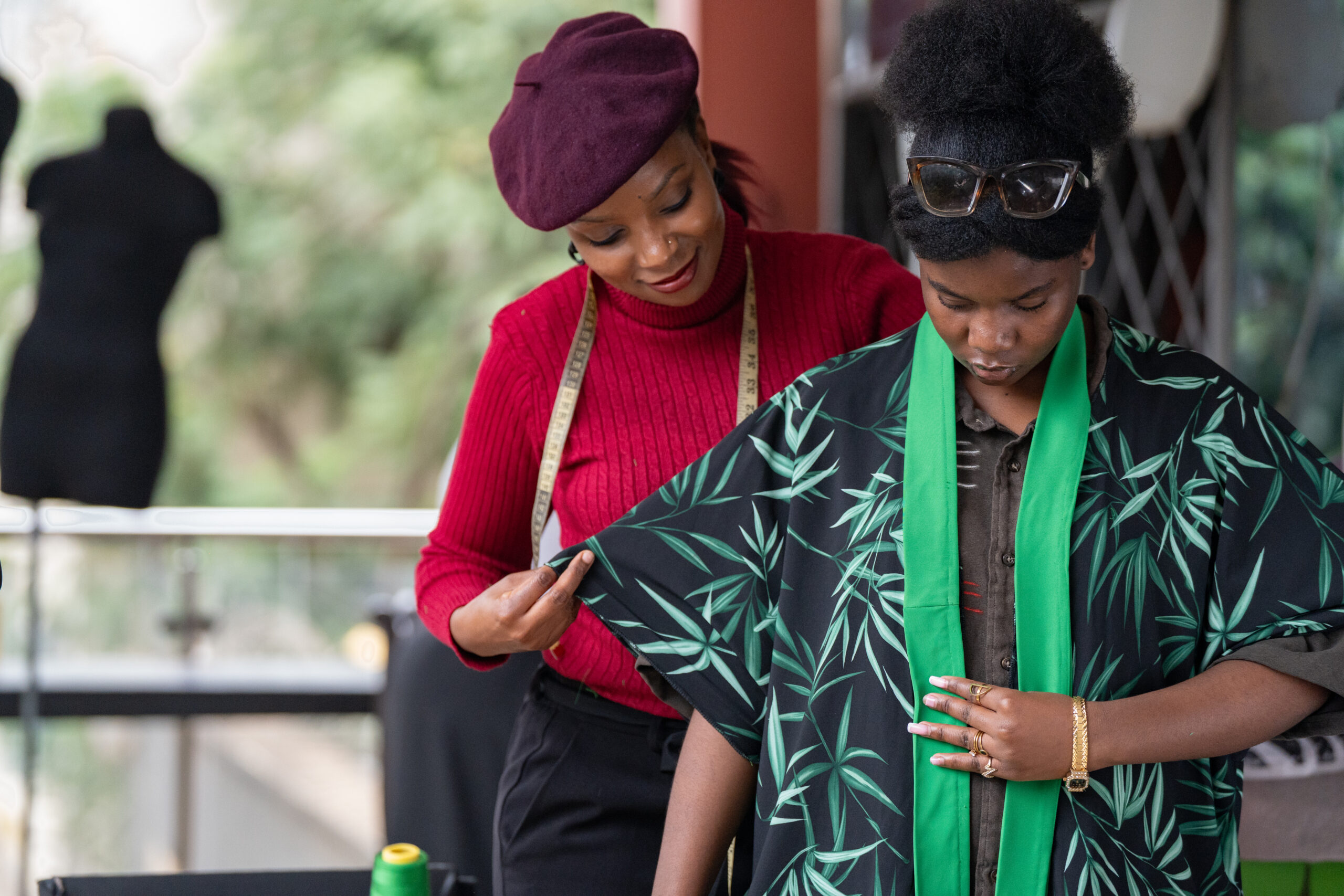
From Roadside Tailor to Certified Artisan: RPL Credit for Ladies’ Garments Construction
By Delight Technical College | School of Tailoring, Fashion & Design- RPL | 2026
Picture a tailor who has worked beside a busy road for eight years. Her customers return because her dresses fit, her seams hold, and her deadlines are reliable. She makes blouses, skirts, simple dresses and school-age girls’ wear almost every week. But when she applied to work in a boutique, the first question was: where is your certificate? This is the exact gap that Recognition of Prior Learning (RPL) is designed to close, and Basic Ladies’ Garments Construction is one of the units where many experienced tailors have the most to gain.
👗 What Basic Ladies’ Garments Construction Covers
This unit focuses on the foundational skills for making garments for women and girls. These typically include:
- Taking accurate body measurements and recording them correctly
- Understanding and using basic patterns for common ladies’ garments
- Cutting fabric accurately, with attention to grainline and layout
- Assembling garments in a logical sequence
- Constructing seams, darts, hems, necklines, sleeves and openings
- Applying fastenings such as zips, buttons and hooks
- Pressing and finishing to a clean, professional standard
- Checking fit and making simple corrections
🎓 Where This Unit Sits in the Delight Learning Guide
Unit 2: Basic Ladies’ Garments Construction
- Module I | Level 3 (Artisan) | Term One
- Builds directly on Unit 1: Sewing Machine Operations
- Sits alongside Unit 3: Basic Gents’ Garments Construction
🧭 What Does “Credit” Actually Mean?
RPL can be used for several purposes: to gain entry to a learning institution, to progress to further learning, to advance in the workplace, or to receive credit towards a qualification. If you are assessed as competent in Basic Ladies’ Garments Construction, that competence is recognised formally. Depending on the outcome and the arrangements of the awarding body, it can reduce the number of units you need to study to complete your qualification.
🪡 How Experience Maps to the Unit
Experienced tailors often discover that their everyday work already matches the unit closely:
- Measuring clients at every fitting maps to taking and recording body measurements
- Drafting or adapting patterns for repeat clients maps to pattern use
- Making a skirt or blouse from start to finish maps to assembly and construction
- Fixing a garment that does not sit right maps to checking fit and correcting
- Ironing and finishing before handover maps to pressing and finishing standards
🗣️ What You Should Be Ready to Explain
Assessors do not only want to see finished garments. They also want to hear you reason about your work. Be ready to answer questions such as:
- How do you decide which seam finish to use on a particular fabric?
- What do you do when a client’s measurements fall between standard sizes?
- How do you avoid puckering on a curved seam or neckline?
- What do you check before you hand a finished garment to a client?
🚀 Steps to Take
- Choose three or four garments that show a range of skills, such as a skirt, blouse, simple dress and a garment with a zip
- Photograph them clearly, inside and out, showing seams and finishing
- Note down the date, the client type and what you did
- Speak to an RPL adviser about how your work matches the unit
“Years of satisfied clients are a kind of qualification already. RPL turns that reputation into a certificate that any employer, college or bank will understand.”
💡 Ready to find out how your ladies’ garment experience can count? Ask Delight Technical College about RPL- call +254 722 533 771 or visit Muindi Mbingu Street, Nairobi.
📍 Delight Technical College | Muindi Mbingu Street, Opposite Jevanjee Gardens, Nairobi | +254 722 533 771 | www.delight.ac.ke