
Drafting Patterns by Hand for Years? RPL Can Certify That
By Delight Technical College | School of Tailoring, Fashion & Design- RPL | 2026
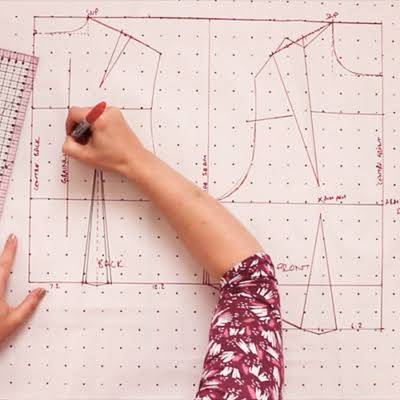
Behind every well-fitting garment is a pattern, and behind every pattern is someone who understood measurements, proportion and the shape of the human body. Many tailors draft patterns by hand on brown paper, newspaper or directly onto cloth, relying on skills built up over years of fittings and corrections. The unit Pattern Construction and Grading Principles recognises this skill at Level 5, and Recognition of Prior Learning (RPL) offers experienced pattern makers a route to certification.
📏 What Pattern Construction Involves
A pattern is a flat template that becomes a three-dimensional garment. A competent pattern maker can:
- Take accurate body measurements and record them clearly
- Draft basic blocks such as a bodice, skirt, sleeve or trouser from measurements
- Adapt blocks to create new styles by moving darts, adding fullness or changing necklines
- Add seam allowances and hem allowances correctly
- Mark grainlines, notches and other construction marks
- Label patterns clearly with the name, size and number of pieces to cut
- Test a pattern using a trial garment and correct any fit problems
- Store patterns so that they are easy to find and reuse
🎓 Where This Unit Sits in the Delight Learning Guide
Unit 11: Pattern Construction and Grading Principles
- Module III | Level 5 (Craft) | Term Three
- Builds on Unit 10: Fashion Design and Sketching, where designs are first developed
- Leads naturally into Unit 16: Garment Cutting Principles at Level 6
✂️ What If I Cut Directly on the Fabric?
Many experienced tailors cut directly onto fabric using measurements and chalk, without a paper pattern. This does not mean you lack pattern knowledge. You are carrying the pattern in your head. For RPL, you may be asked to show the same logic on paper, which is often easier than people expect. Being able to explain why you place a dart or shape a curve is the key.
🗂️ Evidence That Supports Pattern Skills
- Original paper patterns you have drafted, labelled and stored
- Photographs of garments made from those patterns
- Client measurement cards showing how you record and use measurements
- Examples of adapted patterns, such as one block used for several styles
- A statement from an employer or client who has seen you draft patterns
- A trial garment or sample showing how you test and correct fit
🗣️ Questions an Assessor May Ask
- How do you decide how much ease to add for a particular fabric and style?
- What do you do when a pattern fits one client perfectly and another poorly?
- How do you move a dart without changing the fit?
- How do you check that two pattern pieces will join correctly?
🚀 Next Steps
- Gather your best patterns and organise them with clear labels
- Photograph the garments made from them
- Practise drafting a simple block so that you are comfortable on assessment day
- Speak to an RPL adviser about the standard required at Level 5
📐 A Simple Practice Exercise
Before your assessment, draft a basic skirt or bodice block from your own measurements. Make a sample in inexpensive cloth, check the fit, note the adjustments and correct the pattern. Photograph each step and keep the corrected pattern. This one exercise shows measuring, drafting, testing and correcting in a single, easily explained piece of evidence.
“A pattern is a promise that the garment will fit. If you have been keeping that promise for years, a certificate should say so.”
💡 Ask Delight Technical College how your pattern-making experience could count. Call +254 722 533 771 or visit Muindi Mbingu Street, Nairobi.
📍 Delight Technical College | Muindi Mbingu Street, Opposite Jevanjee Gardens, Nairobi | +254 722 533 771 | www.delight.ac.ke