
Written, Spoken and Visual: How Assessors Evaluate Communication Skills
By Delight Technical College | School of Tailoring, Fashion & Design- RPL | 2026
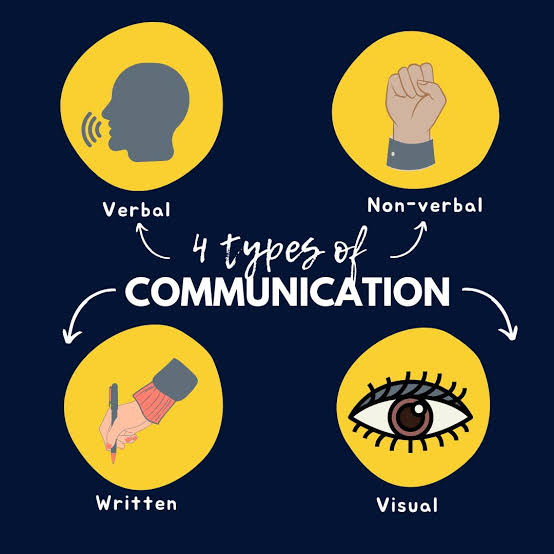
Communication is not one skill but several, and each one can be assessed differently. When you apply for Recognition of Prior Learning (RPL) in the unit Communication Skills, it helps to know which modes of communication an assessor may look at and how they might check them. This guide breaks the unit into three practical parts.
🧩 Three Ways of Communicating at Work
| Mode | Everyday Example | What an Assessor May Check |
| Spoken | Taking a client’s brief, negotiating a price, giving instructions | Clarity, politeness, listening and the ability to explain simply |
| Written | Messages, quotations, order forms, emails, notes on a pattern | Accuracy, structure, correct spelling and a professional tone |
| Visual and non-verbal | Sketches, sample swatches, photographs, body language | Whether visuals clarify the message and whether body language supports it |
🎤 Spoken Communication
Assessors often use conversation. You may be asked to explain a process, describe a past job or respond to a scenario. Good spoken communication is:
- Clear- you speak at a pace that is easy to follow
- Organised- you start with the main point and add details in a sensible order
- Respectful- you listen, do not interrupt and use polite language
- Appropriate- you match your language to the person you are speaking to
✉️ Written Communication
A written task might ask you to draft a short message or fill in a form. Strong written work is:
- Accurate- measurements, prices and dates are correct
- Clear- each sentence says one thing, simply
- Professional- greetings, tone and sign-off are suitable for a client or supplier
- Well presented- easy to read, with no confusing abbreviations
🖼️ Visual Communication
In fashion, a picture often says what words cannot. If you use sketches, mood boards, sample swatches or photographs to agree a design with a client, you are communicating visually. Keep examples to show how you use them.
🎭 Scenario Questions
Assessors often use realistic scenarios to see how you think. Examples include:
- A client says a dress is too tight, but the measurements match the order. What do you say?
- A supplier delivers the wrong fabric a day before a deadline. How do you handle it?
- A new apprentice keeps making the same mistake. How do you explain it differently?
There is rarely one perfect answer. Assessors want to see calm, respectful and practical thinking.
🎓 Where This Fits in the Delight Learning Guide
Unit 9: Communication Skills
- Module III | Level 5 (Craft) | Term Three
🌍 Language Is Not a Barrier
Many Kenyan professionals communicate comfortably in several languages. Being able to move between English, Kiswahili and a mother tongue to suit each client is a real workplace strength. Mention it, and be ready to explain how you decide which language to use in which situation.
🪜 A Short Practice Routine
For a week before your assessment, try a simple daily routine. Explain a task out loud in sixty seconds. Write a polite three-line message to a client about a delayed order. Draw a small diagram to explain a garment detail. Then ask a friend or colleague for honest feedback on clarity. These small exercises build the habit of communicating clearly, and they leave you much more relaxed when the assessor asks you to explain your work.
“Clear communication is not about fancy words. It is about making sure the other person understands exactly what you mean.”
💡 Want to find out how your communication skills could be assessed? Call Delight Technical College on +254 722 533 771 or visit Muindi Mbingu Street, Nairobi.
📍 Delight Technical College | Muindi Mbingu Street, Opposite Jevanjee Gardens, Nairobi | +254 722 533 771 | www.delight.ac.ke