
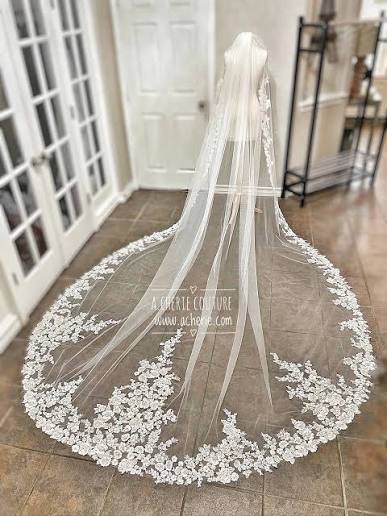
Embroidered and Beaded Bridal Veils: A Specialist Accessory Niche for Delight Graduates
By Delight Technical College | School of Tailoring, Fashion & Design | 2026
Within the broader bridal fashion market, veil making represents a distinct, specialist niche that combines fabric decoration skills, fine handwork, and design sensibility into a single, highly specialised, and often premium-priced product category. For Delight Technical College fashion graduates with strong fabric decoration and accessory-making skills, bridal veil specialisation offers a focused business opportunity within the broader wedding fashion market.
👰 The Bridal Veil as a Distinct Product Category
Unlike a full wedding gown, which requires extensive construction, fitting, and significant fabric investment, a bridal veil is a more contained product requiring specialised skills in fine fabric handling, edge finishing, and decorative embellishment, but significantly less material and construction time than a full garment.
✂️ Technical Skills for Veil Making
Fabric Selection:
- Tulle- the most common veil fabric, available in different stiffness and quality grades
- Illusion netting- finer, softer alternative to tulle for a more delicate effect
- Silk organza or chiffon- premium options for clients seeking a softer, flowing veil aesthetic
Edge Finishing Techniques:
- Raw cut edge- a simple, modern finish appropriate for certain veil styles
- Rolled hem- a delicate, traditional finishing technique requiring fine hand or machine skill
- Ribbon edge- applying ribbon trim along the veil’s edge for a defined, structured finish
- Lace edge- incorporating lace trim for a more elaborate, traditional bridal aesthetic
Decorative Embellishment:
- Beadwork application- scattered or patterned beading across the veil fabric
- Embroidered detail- floral or geometric embroidered motifs
- Appliqué lace- applying separate lace motifs onto the base veil fabric
- Pearl and crystal scattering- a popular, glamorous decorative technique
📐 Veil Construction and Attachment
- Understanding different veil lengths (blusher, elbow, fingertip, chapel, cathedral) and their appropriate proportions
- Gathering and attaching the veil to a comb, headband, or other secure attachment method
- Ensuring the attachment is both secure (for an active wedding day) and comfortable for extended wear
💼 Building a Veil-Specific Business
- Veils require significantly less material investment than full gowns, allowing a designer to build a diverse, ready-to-customise product range with relatively modest upfront cost
- Custom veil commissions can complement a broader bridal gown business, or function as a standalone specialisation
- Veils photograph beautifully and are highly shareable on social media- strong organic marketing potential
- A veil specialist can serve clients whose gowns were purchased elsewhere but who want a custom, coordinated veil
🎓 Building This Skill at Delight
Veil making draws directly on the Fabric Decoration module (Level 5) and Fashion Accessories module (Level 6), applying those broader decorative and accessory construction skills to this specific, commercially focused bridal product category.
“A bridal veil is a small product with an outsized emotional and visual impact on a wedding day. At Delight, the fine fabric handling and decorative skills our students develop translate directly into this rewarding specialist craft.”
📍 Delight Technical College | Muindi Mbingu Street, Opposite Jevanjee Gardens, Nairobi | +254 722 533 771 | www.delight.ac.ke