
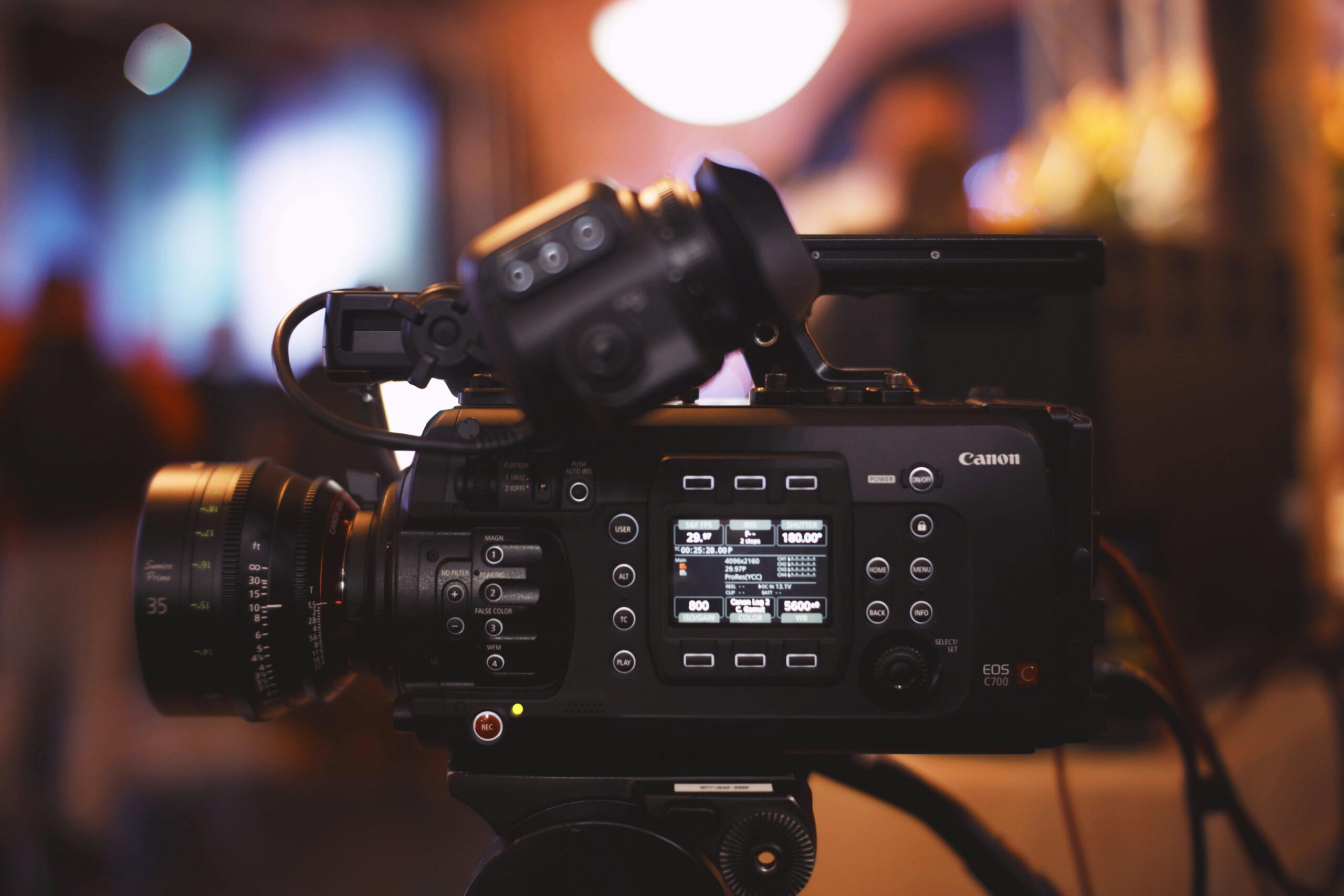
Camera Operation Fundamentals: What Every Delight Media Student Learns First
By Delight Technical College | School of Media & AI | 2026
Before you can tell a visual story, you need to master the tool you tell it with. The camera is the fundamental instrument of both photography and film production and understanding how to operate it, control it, and use it creatively is the starting point for every Delight School of Media & AI student. Here is a comprehensive guide to what camera operation training at Delight covers.
📷 The Camera- More Than a Point and Shoot
Modern digital cameras, whether DSLRs, mirrorless cameras, or cinema cameras are extraordinarily capable tools. But their capability is only unlocked when the operator understands the fundamentals: how light is captured, how the sensor works, and how the three core exposure settings interact to produce an image.
🔦 The Exposure Triangle
Every photography and videography student at Delight begins with the exposure triangle (the three camera settings that together determine the brightness and character of an image):
Aperture (f-stop):
- Controls how much light enters the lens through the iris diaphragm
- Expressed as f-numbers: f/1.8 (wide, more light) to f/22 (narrow, less light)
- Also controls depth of field — f/1.8 creates a blurry background; f/16 keeps everything sharp
- Wide apertures (f/1.8–f/2.8) are used for portraits and low light; narrow apertures for landscapes and product shots
Shutter Speed:
- Controls how long the sensor is exposed to light
- Fast shutter speeds freeze motion; slow speeds blur it
- In video, the 180-degree rule governs shutter speed: double the frame rate (24fps = 1/50s shutter)
- Critical for sports photography and action videography
ISO:
- Controls the sensor’s sensitivity to light
- Low ISO (100–400) produces clean images in good light
- High ISO (3200+) enables shooting in low light but introduces grain (noise)
- Understanding acceptable noise levels for different production contexts
🎯 Composition Principles
Beyond exposure, Delight students learn the visual language of composition:
- Rule of thirds- placing subjects off-centre for more dynamic images
- Leading lines- using natural lines to guide the viewer’s eye
- Framing- using foreground elements to frame the subject
- Headroom and look room- giving subjects appropriate space in the frame
- Camera angles- how high, low, and eye-level angles communicate different meanings
- Shot sizes (extreme wide, wide, medium, close-up, extreme close-up)
🎬 Camera Movement
In film and videography, camera movement is a storytelling tool:
- Static shots- communicating stability, formality, or observation
- Pan and tilt- moving the camera horizontally or vertically on a tripod
- Tracking- moving the camera alongside a subject
- Handheld- creating energy, urgency, and immediacy
- Crane and drone- establishing geography and creating cinematic scale
“The camera is your pen. Before you can write, you must know how it works. Camera operation is where every great photographer and filmmaker begins their mastery.”
📍 Delight Technical College | Muindi Mbingu Street, Opposite Jevanjee Gardens, Nairobi | +254 722 533 771 | www.delight.ac.ke

You may also like

African Typography and the Design of Kenyan-Language Content

