
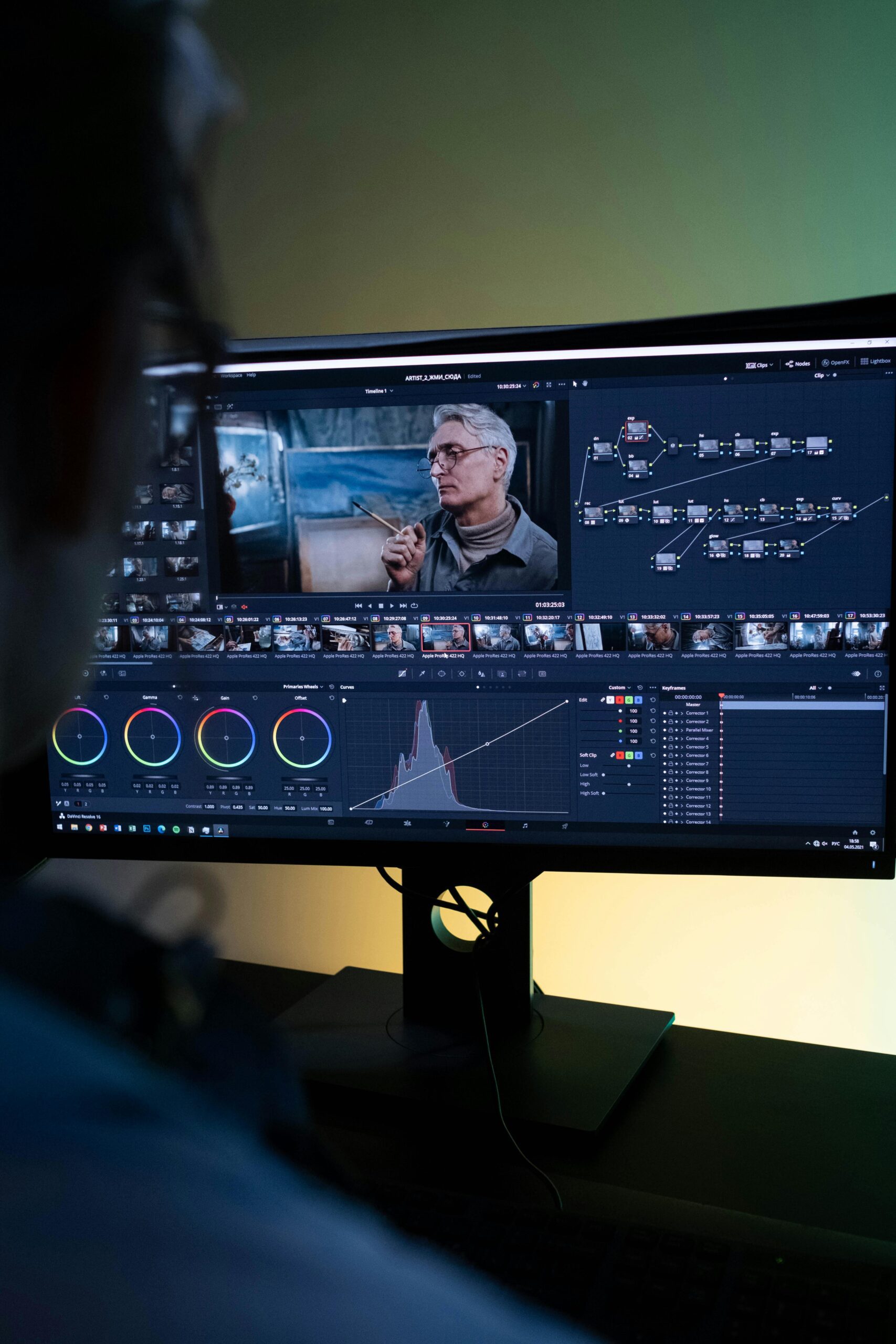
Video Editing Essentials | Delight Technical College
Essentials of Video Editing
Why Editing Is the Heart of Storytelling in the Modern Media Industry
The Film Is Made Twice — Once on Set, and Once in the Edit
A camera captures moments.
But an editor creates meaning.
Two people can film the same scene — with the same actors, the same dialogue, the same location — and produce completely different stories depending on how the footage is edited.
This is the invisible power of video editing.
Editing decides:
- What the audience sees
- When they see it
- How long they feel it
- What they remember after the screen goes dark
In today’s media-driven world, where video dominates communication — from film and television to social media, advertising, education, and AI-generated content — video editing is no longer a supporting skill. It is essential.
At Delight Technical College, particularly within the School of Media and AI, students are taught that video editing is not just technical work. It is storytelling, psychology, rhythm, and communication combined.
This article explores the essentials of video editing, why they matter in the modern creative industry, and how training at Delight Technical College prepares students to edit with clarity, purpose, and professional confidence.
What Is Video Editing Really About?
Many beginners think video editing is about:
- Cutting clips
- Adding transitions
- Applying effects
- Syncing music
But these are just tools.
At its core, video editing is about decision-making.
Every cut asks a question:
- What is important right now?
- What emotion should the audience feel?
- What information should come next?
- When should the moment end?
At Delight Technical College, students learn that editing is the final rewrite of the story.
Why Video Editing Is Essential in Today’s Media Industry
Video has become the dominant form of communication.
It shapes:
- Entertainment
- Marketing
- Journalism
- Education
- Branding
- Social interaction
Every industry now needs editors.
From feature films and documentaries to YouTube videos, corporate content, online courses, and AI-assisted media, editing is the skill that turns raw footage into meaningful content.
The creative industry does not just need people who can use editing software. It needs professionals who can:
- Think critically
- Communicate visually
- Understand pacing and emotion
- Adapt content for different platforms
This is why Delight Technical College emphasizes editing fundamentals alongside storytelling, media theory, and AI integration.
Understanding Editing as Visual Communication
Editing is a language.
Just like graphic design or screenwriting, editing communicates through:
- Rhythm
- Timing
- Juxtaposition
- Silence
- Movement
A pause can speak louder than dialogue.
A quick cut can create urgency.
A long take can build tension.
Students in the School of Media and AI are trained to read and write this visual language fluently.
- Story First: Editing With Purpose
The first essential of video editing is understanding the story.
Before touching the timeline, an editor must know:
- What the video is about
- Who it is for
- What it is meant to achieve
Without story clarity, editing becomes random.
At Delight Technical College, students are taught to:
- Analyse scripts and footage
- Identify narrative arcs
- Understand emotional beats
- Edit with intention, not habit
In the professional industry, editors who understand story are trusted with larger, more complex projects.
- Organization: The Foundation of Professional Editing
Great editing starts before the first cut.
Professional editors organize:
- Footage
- Audio
- Graphics
- Music
- Versions
Disorganized timelines lead to:
- Slower workflows
- Mistakes
- Missed details
At Delight Technical College, students are trained in industry-standard file management, naming conventions, and workflow discipline.
This skill is critical in studios, agencies, and collaborative environments where multiple people work on the same project.
- The Cut: Knowing When to Stay and When to Leave
The most fundamental editing tool is the cut.
Knowing when to cut is more important than knowing how.
Editors must ask:
- Has the moment delivered its meaning?
- Is the emotion still building?
- Has the audience understood the information?
Cutting too early feels rushed.
Cutting too late feels boring.
Students in the School of Media and AI practice timing through:
- Scene analysis
- Rhythm exercises
- Comparative edits
In the film and media industry, strong cutting skills are a mark of editorial maturity.
- Pacing and Rhythm: Controlling Audience Emotion
Pacing determines how a story feels.
Fast pacing creates:
- Energy
- Urgency
- Excitement
Slow pacing creates:
- Reflection
- Suspense
- Emotional weight
Effective editors control pacing by:
- Shot length
- Transitions
- Music placement
- Silence
At Delight Technical College, students learn how pacing changes across:
- Films
- Documentaries
- Advertisements
- Social media
- Educational videos
Understanding pacing is essential for editing content that holds attention in different contexts.
- Continuity: Making the Story Feel Seamless
Continuity ensures that the video feels logical and believable.
Editors must watch for:
- Matching actions
- Consistent screen direction
- Logical time flow
- Visual coherence
Poor continuity distracts the audience and breaks immersion.
Students at Delight Technical College are trained to spot and fix continuity issues — a skill highly valued in professional production environments.
- Audio Editing: Half of the Story Is What You Hear
Many beginners underestimate sound.
But audiences will forgive imperfect visuals faster than poor audio.
Essential audio skills include:
- Dialogue clarity
- Sound balancing
- Noise reduction
- Music integration
At the School of Media and AI, students learn that sound design and editing are storytelling tools, not technical afterthoughts.
In the media industry, editors who understand audio are more versatile and employable.
- Music: Emotion Without Words
Music shapes emotion instantly.
The same scene can feel:
- Hopeful
- Sad
- Dangerous
- Triumphant
Depending on the music choice and timing.
Students are taught how to:
- Choose appropriate music
- Cut to rhythm
- Respect emotional beats
- Avoid overuse
In professional editing, music supports the story — it never competes with it.
- Transitions and Effects: Less Is More
Transitions and effects should serve the story.
Overuse can:
- Distract
- Date the content
- Reduce clarity
Effective editors know when to:
- Use simple cuts
- Apply subtle transitions
- Add effects only when they enhance meaning
At Delight Technical College, students are encouraged to master fundamentals before experimenting with stylistic effects.
This approach aligns with industry expectations, where clarity always comes first.
- Editing for Different Platforms
A film edit is not the same as a social media edit.
Different platforms require different approaches:
- Aspect ratios
- Duration
- Attention spans
- Viewing conditions
Students in the School of Media and AI learn how to adapt edits for:
- Cinema
- Television
- YouTube
- TikTok
- Educational platforms
This adaptability is essential in today’s multi-platform media industry.
- The Role of AI in Modern Video Editing
Artificial intelligence is transforming video editing workflows.
AI can:
- Speed up rough cuts
- Assist with captions
- Analyse footage
- Suggest edits
However, AI cannot replace editorial judgment.
At Delight Technical College, students learn how to:
- Use AI tools responsibly
- Maintain creative control
- Combine human storytelling with technological efficiency
This prepares graduates for the future of editing, where human creativity and intelligent systems work together.
Why Video Editing Skills Matter in the Creative Industry
Editors are storytellers behind the scenes.
Strong editing skills:
- Improve storytelling quality
- Increase audience engagement
- Enhance brand credibility
- Open career opportunities
The creative industry needs editors who can:
- Think critically
- Communicate visually
- Collaborate effectively
- Adapt to new tools
Delight Technical College’s approach ensures students graduate with both technical competence and creative confidence.
From Training to Career: Editing at Delight Technical College
Students at Delight Technical College gain hands-on experience through:
- Practical projects
- Real-world simulations
- Portfolio development
- Industry-aligned workflows
Graduates are prepared for careers in:
- Film and television
- Content creation
- Advertising
- Digital media
- Education
- Post-production studios
The School of Media and AI ensures students are not just software users — but editors who understand meaning.
Final Thoughts: Editing Is Where Stories Come Alive
Footage captures reality.
Editing shapes experience.
When editing is done well, the audience never notices it — they simply feel the story.
Understanding the essentials of video editing transforms creators from technicians into storytellers.
Learn to Edit With Purpose
If you are passionate about film, media, and digital storytelling, the School of Media and AI at Delight Technical College offers the training, tools, and mentorship needed to master video editing in a rapidly evolving industry.
Learn to cut with intention.
Learn to edit with emotion.
Learn to turn raw footage into powerful stories.
Your story isn’t finished until it’s edited — start your journey today.