
Skip to content
Back
  • Home
  • About
    • About Us
    • Partners
  • Admission
    • Admission
    • Accommodation
  • Courses
  • Schools
    • School of Tailoring Fashion & Design
    • School of Media & AI
  • Events
  • Community
    • Community
    • Campuses
    • Alumni
    • Gallery
    • Delight Models
  • FAQs
  • Blog
  • Contact us
  • Have any question?
  • +254 722 533 771
  • +254 724 566 088
  • [email protected]
  • Student Portal
Login
Delight Technical College
  • Home
  • About
    • About Us
    • Partners
  • Admission
    • Admission
    • Accommodation
  • Courses
  • Schools
    • School of Tailoring Fashion & Design
    • School of Media & AI
  • Events
  • Community
    • Community
    • Campuses
    • Alumni
    • Gallery
    • Delight Models
  • FAQs
  • Blog
  • Contact us

Delight Technical College

  • Home
  • Blog
  • Delight Technical College

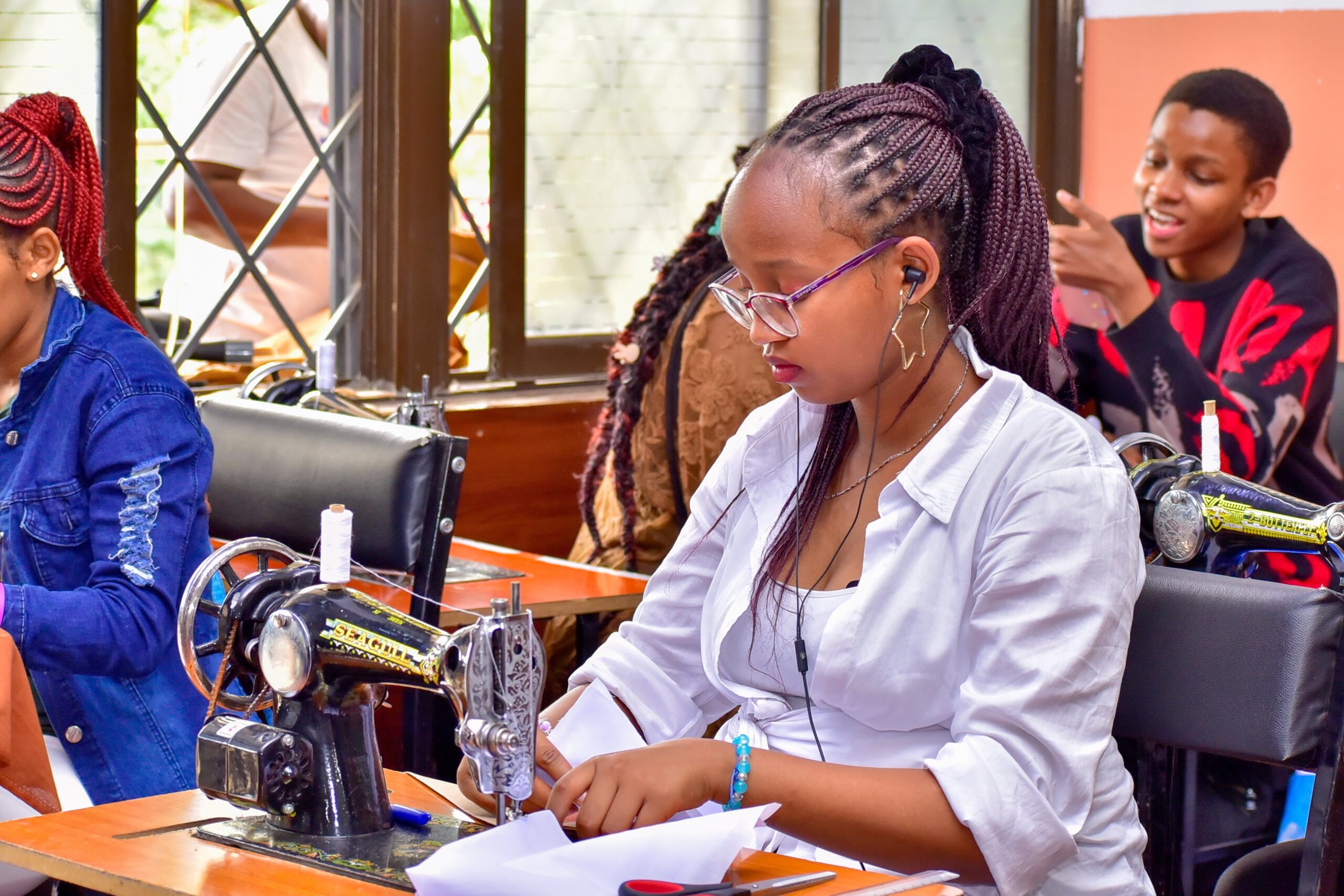
Garment Cutting at Level 6: The Precision Skill That Separates Amateurs From Professionals

  • Categories Delight Technical College, Fashion, School of Fashion & Design
  • Date May 22, 2026
  • Comments 0 comment
  • Tags Delight School of Fashion and Design, Fashion and Design

By Delight Technical College | Fashion Curriculum Deep Dive | 2026


There is a saying in professional fashion production: the quality of a garment is determined before a single stitch is sewn. It is determined at the cutting table. Garment cutting is one of the most critical and most underestimated skills in the entire fashion production process. At Level 6, Delight Technical College dedicates 100 intensive hours to mastering this discipline.

✂️ About the Module

  • Module: Garment Cutting
  • Level: 6 | Term: Five (Module V)
  • Total Hours: 100 | Hours per Week: 9


🔍 What Is Garment Cutting?

Garment cutting is the process of transforming fabric from a roll or piece into the individual components that will be sewn together to form a finished garment. It sounds simple but at a professional level, it is a highly technical process that determines:

  • Whether the finished garment will fit correctly
  • How much fabric is wasted or conserved
  • The efficiency of the production process
  • The quality of the seams, grain lines, and structural elements
  • Whether pattern repeats, prints, and checks are correctly matched


📐 What You Will Learn

Industrial Cutting Techniques:

  • Understanding grain lines and how fabric behaves on and off-grain
  • Lay planning- the art of arranging patterns on fabric to minimise waste
  • Single-ply vs multi-ply cutting- cutting one layer vs stacked layers for production
  • Using cutting tools- rotary cutters, shears, electric knives, and die cutters

Fabric-Specific Cutting:

  • Cutting woven fabrics- managing fraying and selvedge
  • Cutting knit fabrics- managing stretch and recovery
  • Cutting delicate fabrics- silk, chiffon, and lace without distortion
  • Cutting pile fabrics- velvet and fleece with nap direction
  • Cutting leather and faux leather- specific tools and techniques

Pattern Matching:

  • Matching checks, stripes, and geometric prints across seams
  • Matching floral and large-repeat prints
  • The additional fabric requirements for pattern-matched garments

Efficiency and Sustainability:

  • Zero-waste cutting plans- arranging patterns to use every piece of fabric
  • Calculating fabric requirements accurately before cutting
  • Managing offcuts and remnants for smaller projects or decoration


💼 Why This Matters Professionally

In a garment factory or production studio, the cutter is a skilled specialist not an afterthought. A poor cutting job cannot be fixed by a skilled sewer. The error is permanent. Conversely, a perfectly cut set of garment pieces makes the sewing process faster, more accurate, and ultimately produces a higher-quality result. Level 6 graduates who master garment cutting are immediately valuable in production environments.

“Cut well, sew easily. Cut poorly, struggle forever. Garment cutting is where production success or failure is decided.”


💡 The garment cutting module at Level 6 builds directly on pattern construction skills developed at Level 5. Another reason why the progressive pathway at Delight matters.

📍 Delight Technical College | Muindi Mbingu Street, Opposite Jevanjee Gardens, Nairobi | +254 722 533 771 | www.delight.ac.ke


Tag:Delight School of Fashion and Design, Fashion and Design

  • Share:
author avatar
Saitoti Meitamei - Founder and Principal, Delight Technical College

Previous post

How Digital Learning and E-Submissions Work at Delight Technical College
May 22, 2026

Next post

What Is a Fashion Technologist? The Career Path You Have Never Heard Of
May 22, 2026

You may also like

images (8)
African Typography and the Design of Kenyan-Language Content
September 21, 2026
images (7)
Producing a Short Documentary Series for YouTube: Structure and Strategy
September 21, 2026
images (6)
Colour in Fashion Retail Display: How Delight Graduates Design for the Shop Floor
September 21, 2026

Leave A Reply Cancel reply

Your email address will not be published. Required fields are marked *

Don't miss any of our Updates

  • +254 722 533 771
  • +254 724 566 088
  • [email protected]


  • Main Campus Delight Center, 1st floor, Muindi Mbingu Street, opposite Jevanjee Gardens entry, Next to Jumia & Loris, Before Kenya Comfort Hotel, Central Nairobi, Kenya, Africa

QUICK LINKS

  • Home
  • About Us
  • Partners
  • Contact Us

Courses

  • School of Tailoring, Fashion & Design.
  • School of Media & AI

Student Resource

  • Student Portal
  • Register

TVET CDACC/NITA Accredited

Institution Name: DELIGHT TECHNICAL COLLEGE

Center Code
04700064

Institution code (NITA/CE): 1735

TVETA/PRIVATE/TVC/0080/2022

© Delight Technical College | 2026

Manage Consent
To provide the best experiences, we use technologies like cookies to store and/or access device information. Consenting to these technologies will allow us to process data such as browsing behavior or unique IDs on this site. Not consenting or withdrawing consent, may adversely affect certain features and functions.
Functional Always active
The technical storage or access is strictly necessary for the legitimate purpose of enabling the use of a specific service explicitly requested by the subscriber or user, or for the sole purpose of carrying out the transmission of a communication over an electronic communications network.
Preferences
The technical storage or access is necessary for the legitimate purpose of storing preferences that are not requested by the subscriber or user.
Statistics
The technical storage or access that is used exclusively for statistical purposes. The technical storage or access that is used exclusively for anonymous statistical purposes. Without a subpoena, voluntary compliance on the part of your Internet Service Provider, or additional records from a third party, information stored or retrieved for this purpose alone cannot usually be used to identify you.
Marketing
The technical storage or access is required to create user profiles to send advertising, or to track the user on a website or across several websites for similar marketing purposes.
  • Manage options
  • Manage services
  • Manage {vendor_count} vendors
  • Read more about these purposes
View preferences
  • {title}
  • {title}
  • {title}

WhatsApp us

Login with your site account

Prove your humanity


Lost your password?

Home
Account