Lighting Design for Film and Video: How Delight Trains Cinematographers to Control Light
By Delight Technical College | School of Media & AI- Film Production | 2026
Ask any experienced filmmaker to name the single most important technical skill in production and the answer is almost always the same: lighting. Not camera operation. Not editing. Not sound (though all of these matter enormously). Lighting. The ability to see light, understand it, shape it, and use it to tell a story is what separates amateur video from professional filmmaking. At Delight Technical College, lighting design is taught as a foundational discipline throughout the Film Production and Videography programmes.
🔦 Why Lighting Is the Filmmaker’s Most Powerful Tool
Cinema is, literally, the recording of light. Every mood, every atmosphere, every visual emotion in a film is created through the quality, direction, and colour of light. Consider how different lighting transforms the same scene:
- Soft, warm lighting from a low angle creates intimacy and vulnerability
- Harsh overhead light creates oppression, surveillance, and institutional coldness
- Backlit silhouettes create mystery, power, and cinematic drama
- Natural window light creates authenticity, realism, and documentary truth
None of these effects happen by accident. They are designed by a cinematographer and lighting director working together to realise the director’s vision.
☀️ Understanding Natural Light- The First Lesson
Quality of Light:
- Hard light- direct sunlight on a clear day, creating sharp shadows and strong contrast
- Soft light- overcast sky or light diffused through a large surface, creating gentle shadows and even illumination
- Reflected light- light bounced off a surface, softened and warmed by the colour of the reflector
Direction of Light:
- Front lighting- even illumination with minimal shadow. Flattering but often flat and uninspiring
- Side lighting- strong shadow on one side, creating dimension and drama
- Back lighting- the subject illuminated from behind, creating rim light and atmosphere
- Top lighting- overhead sources, which can be unflattering for faces but useful for establishing environment
Colour Temperature:
- Sunlight varies from warm golden at sunrise/sunset to cool blue at midday
- Mixed light sources (tungsten lamps + daylight windows) create colour cast challenges
- White balance- adjusting the camera to neutralise colour temperature
🔦 Studio and Artificial Lighting at Delight
Key Lighting Equipment:
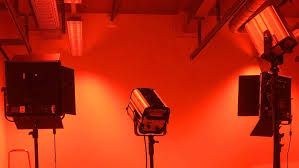
- LED continuous lights – versatile for both photo and video, dimmable and colour-adjustable
- Softboxes- diffusing light from a hard source for soft, even illumination
- Reflectors and bounce cards- redirecting and softening light without electricity
- Barn doors and flags- blocking and shaping light precisely
- Practical lights- real on-set light sources used as part of the visual design
Classic Film Lighting Setups:
- Three-point lighting- key, fill, and back light. The foundational setup for interview and corporate work
- High-key lighting- bright, even, minimal shadow. Commercial, music video, and beauty work
- Low-key lighting- deep shadow, high contrast. Drama, thriller, and moody atmospheric content
- Available light filmmaking- using only what exists on location, shaped by flags and reflectors
🎓 Lighting Training at Delight
Delight’s Photography, Film, and Digital Media Production Studio is equipped with professional lighting systems giving students hands-on experience from their first term. Rather than learning lighting theory on paper and practising with inadequate equipment, students learn lighting by doing: with professional tools, real subjects, real locations, and immediate tutor feedback.
- Lighting for portraiture- classical portrait lighting setups applied to real subjects
- Lighting for narrative film- creating mood and atmosphere for scripted scenes
- Lighting for documentary- working with available light on real locations
- Lighting for corporate and commercial video- the clean, professional look clients expect
- On-location lighting challenges- managing mixed sources, weather, and logistics
💼 Career Paths for Lighting-Skilled Graduates
- Cinematographer / Director of Photography- leading the visual look of productions
- Gaffer / Chief Lighting Technician- managing all lighting on professional sets
- Corporate Video Production Specialist- producing consistently well-lit commercial content
- Portrait and Fashion Photographer- applying studio lighting mastery to still imagery
“Light is not just what the camera sees, it is what the audience feels. At Delight, we train filmmakers who know the difference, and who can create the feeling they want with intention and skill.”
📍 Delight Technical College | Muindi Mbingu Street, Opposite Jevanjee Gardens, Nairobi | +254 722 533 771 | www.delight.ac.ke