
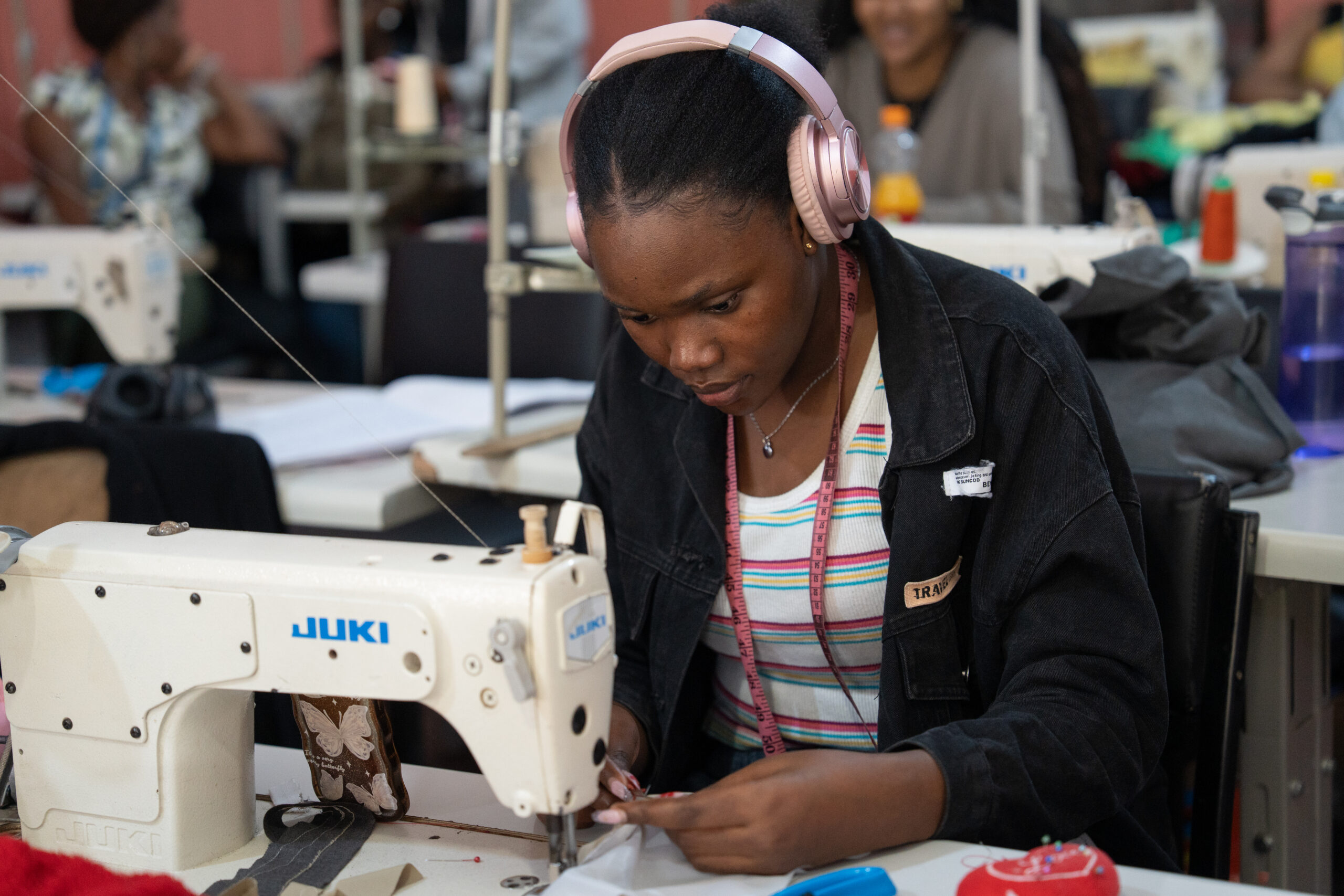
Fashion Technology vs Traditional Tailoring: How the Craft Has Evolved and Why Both Still Matter
By Delight Technical College | Fashion History & Practice | 2026
The history of tailoring and dressmaking spans thousands of years. For most of that history, garments were made entirely by hand using needles, thread, shears, and the skill of the maker’s hands. Today, fashion production is a hybrid of ancient craft traditions and cutting-edge technology from industrial sewing machines to AI-assisted design. At Delight Technical College, we train students in both because understanding the tradition is the foundation for mastering the technology.
🧵 Traditional Tailoring- The Foundation of All Fashion
Traditional tailoring is the craft of making garments by hand (measuring, cutting, and sewing fabric into clothing using skills developed over centuries). At its highest level, bespoke tailoring (Savile Row in London, Neapolitan tailoring in Italy) remains the gold standard of garment quality, a skill that no machine has fully replicated.
What Traditional Tailoring Includes:
- Hand measurement and pattern drafting from scratch- customised for individual bodies
- Hand cutting- using shears with precision and intentionality
- Hand stitching- the pad stitching, hand basting, and finishing that machines cannot match
- The bespoke fitting process- multiple fittings with the client to achieve perfect fit
- Pressing and shaping- using steam and hand pressure to create three-dimensional form in flat fabric
⚙️ Fashion Technology- The Modern Production Reality
Fashion technology refers to the tools, systems, and processes that enable modern fashion production at scale from individual designer studios to industrial factories:
- Industrial sewing machines producing consistent, high-speed stitching
- Computer-Aided Design (CAD)- designing and specifying garments digitally
- Digital pattern making- creating and modifying patterns on screen rather than paper
- 3D garment simulation- visualising garments on digital avatars before physical production
- Automated cutting systems- precision fabric cutting at industrial scale
- AI-assisted trend forecasting- using data to predict market demand
🔗 Why Both Still Matter
The relationship between traditional tailoring and fashion technology is not one of replacement — it is one of evolution. Consider:
- A CAD designer who cannot understand construction principles creates designs that cannot be made
- A traditional tailor who does not adapt to digital tools will be left behind by a changing industry
- The finest luxury garments in the world combine traditional hand techniques with modern materials and technology
- Pattern grading ,whether done by hand or digitally, requires the same underlying understanding of pattern construction
🎓 Delight’s Balanced Approach
This is why Delight’s fashion curriculum teaches both. Students begin with traditional construction at Level 3, develop technical mastery through Levels 4 and 5, and add modern technology (including CAD) at Level 6. By graduation, they can operate in both traditional and modern contexts, a versatility that the industry values enormously.
“Master the hand, then master the tool. A craftsperson who understands why something is done will always outperform one who only knows how to press a button.”
📍 Delight Technical College | Muindi Mbingu Street, Opposite Jevanjee Gardens, Nairobi | +254 722 533 771 | www.delight.ac.ke