
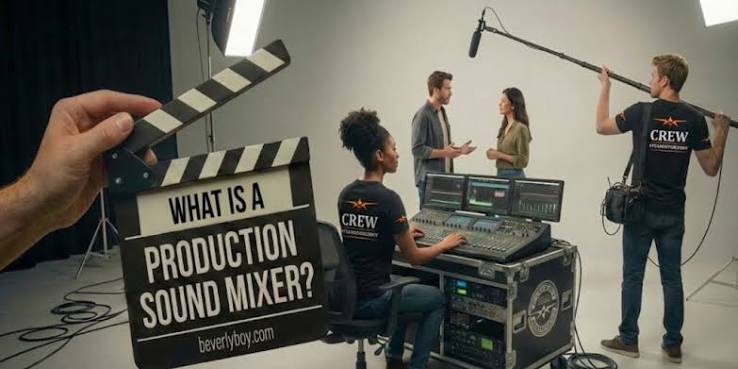
Production Sound Mixing: Balancing Multiple Audio Sources for Live Events
By Delight Technical College | School of Media & AI- Videography | 2026
Capturing clean audio from a single microphone is challenging enough but many professional videography assignments, particularly live events, require managing and mixing multiple simultaneous audio sources: a speaker’s microphone, ambient room sound, music, and sometimes audience reaction, all balanced together into a coherent final mix. This live and post-production sound mixing skill is a significant technical specialisation within Delight Technical College’s Videography programme.
🎚️ Common Multi-Source Audio Scenarios
- Wedding ceremonies- officiant microphone, couple’s vows, ambient room sound, and sometimes live or recorded music
- Corporate presentations- presenter microphone, presentation audio (if playing video content), and audience questions
- Panel discussions and interviews- multiple speaker microphones requiring individual level management
- Live performances- instrument and vocal mix alongside crowd reaction and ambient atmosphere
🔧 Technical Approaches to Multi-Source Mixing
Direct Audio Feed Access:
Where possible, obtaining a direct audio feed from the venue’s sound system (via a board mix or direct line out) provides significantly cleaner audio than relying solely on camera-mounted or distant microphones to capture amplified sound.
Multiple Microphone Strategy:
- Dedicated lavalier or handheld microphones on primary speakers for clean, close dialogue capture
- A secondary ambient microphone capturing room atmosphere and audience reaction for authentic environmental sound
- Understanding how to balance these sources in the mix- primary speech clear and forward, ambient sound present but subordinate
Live Mixing vs Post-Production Mixing:
Some productions require real-time audio mixing decisions during the live event itself (particularly for live streaming or simultaneous broadcast), while others can defer all mixing decisions to post-production, working with multiple isolated audio tracks recorded simultaneously.
🖥️ Post-Production Audio Mixing
- Levelling- ensuring consistent volume across different speakers and sources, since natural speaking volume varies significantly between individuals
- EQ (Equalisation)- shaping each source’s tonal character to sit well together without frequency conflicts
- Compression- managing dynamic range so quiet moments remain audible and loud moments do not distort or overwhelm
- Spatial placement- in stereo or multi-channel mixes, positioning different sources appropriately within the sound field
🎓 Sound Mixing Training at Delight
Delight’s Videography programme, supported by access to Adobe Audition within the shared post-production suite, provides hands-on training in both live event audio capture strategy and post-production mixing technique preparing graduates for the technically demanding, frequently encountered reality of multi-source event audio.
💼 Why This Skill Commands Premium Rates
Clean, professionally mixed audio for complex multi-source events is technically demanding and relatively rare among videographers, who often focus disproportionately on visual quality while treating audio as an afterthought. Videographers who can confidently and reliably deliver excellent multi-source audio mixing differentiate themselves significantly within the competitive event videography market.
“A wedding video with beautiful visuals but muddy, unbalanced audio fails the client in one of the most important moments (hearing the vows clearly). At Delight, we train videographers who treat audio mixing with the same seriousness as visual composition.”
📍 Delight Technical College | Muindi Mbingu Street, Opposite Jevanjee Gardens, Nairobi | +254 722 533 771 | www.delight.ac.ke